Maasai village visit: cost, conduct and where the money goes
A Maasai village visit on a Masai Mara, Kenya, safari is usually sold as an extra, outside the tour price. 27 of 35 GetYourGuide Masai Mara listings name the village among their exclusions, and where GetYourGuide and Viator listings give a price it is usually USD 20 per person (listings read 12 November 2026). Two conservancies say where visit money goes: Mara North sends money from its designated cultural manyattas to a community bursary kitty, and Nashulai says profits from its day visits go to the conservancy and its community.
Some links on this page are affiliate links: the guide earns a commission when you book through them. The partner sets the price; the guide adds no fee.
Ziara·Before you book
Who runs the visit, and what to ask before you pay
A village visit can be three different things. A conservancy can designate a cultural manyatta and say where its money goes. A conservancy can sell its own day visit. Or a tour operator can stop at a village on the way and charge a fee on the day. Only the first two come with a public statement on the money, and both are below in the conservancies' own words.
The questions under the cards are about the operator, not about the people you visit. Ask them before you pay, by message, so the answer is in writing. The conservancies page covers Mara North, Nashulai and the others in full, and the Maasai people covers who the Maasai are and how the land leases work.
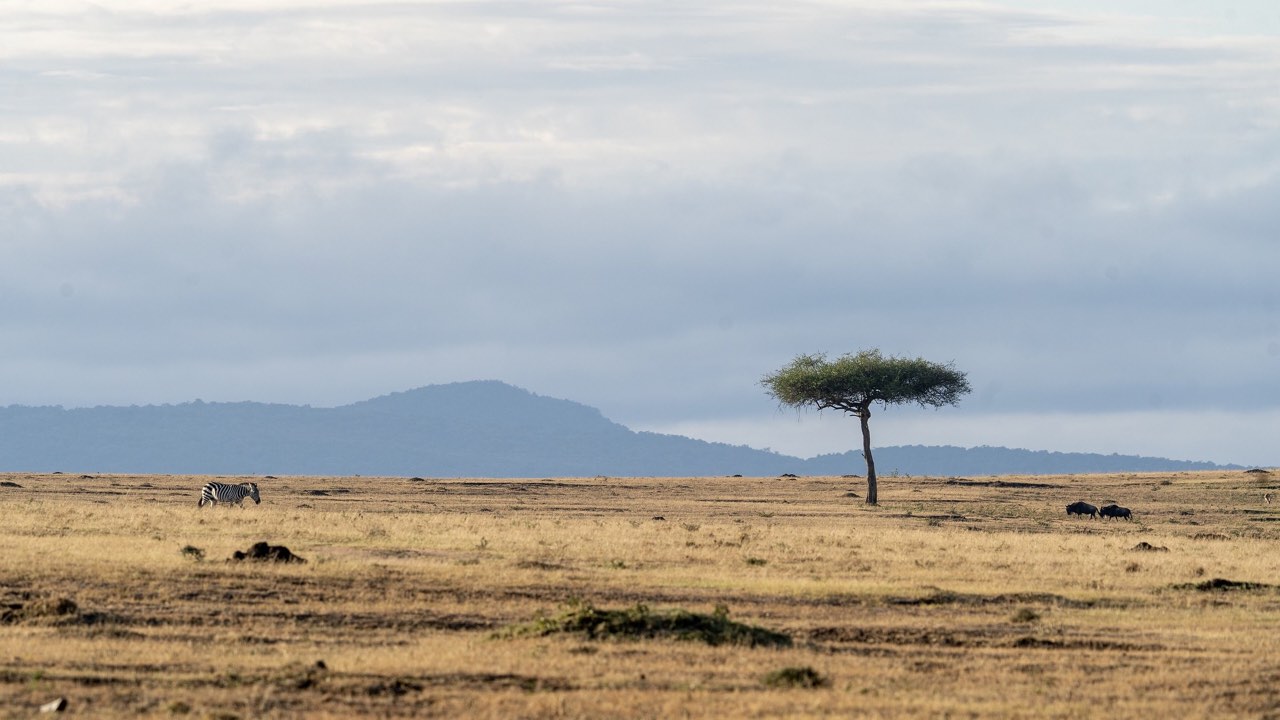
A track across the plains. A visit is something to arrange through your operator or a conservancy.
Who runs it
1
A conservancy's designated cultural manyatta
Mara North Conservancy states a cultural manyatta policy: residents sell souvenirs, including beadwork, at designated cultural manyattas, and the funds collected there go to the community bursary kitty.
Ask Mara North for the visit fee and which manyattas are designated.
2
A conservancy's own day visit
Nashulai Maasai Conservancy offers day visits that can include community and manyatta visits, besides e-bike tours, walks with a Maasai ranger and a ranger patrol. It states that profits from its camps, day visits and Nashulai Journeys go to conservancy operations, ecological regeneration and the community's economic development.
Its two camps, Wageni and Oldarpoi, are staffed by Nashulai community members. Ask Nashulai for the day-visit price.
3
A village visit sold as a tour extra
Of 35 GetYourGuide Masai Mara listings read on 12 November 2026, 27 list a Maasai village among their exclusions; of the 16 that give a price, 15 say USD 20 per person and 1 says USD 30. On Viator, 7 of 20 list it as excluded, and the 4 that give a price all say USD 20 per person.
None of these listings says who receives the fee.
Questions to ask your operator before you pay
You pay this separately, so you can ask before you hand over any money. Start with where the fee goes.
Who receives the fee: the village, a community fund or the operator?
Is the village a conservancy's designated cultural manyatta, and which conservancy?
Is the fee included or paid on the day, and in what currency?
Is photography part of the visit, and are people asked first?
Is anything for sale, and who sets the price?
Part of your package price pays for the visit. Ask which village it is, and who receives that part.
Is the village a conservancy's designated cultural manyatta, and which conservancy?
Who receives the fee: the village, a community fund or the operator?
Is the fee included or paid on the day, and in what currency?
Is photography part of the visit, and are people asked first?
Is anything for sale, and who sets the price?
A visit may still be offered on the road. Ask first whether it costs extra and how it is paid.
Is the fee included or paid on the day, and in what currency?
Who receives the fee: the village, a community fund or the operator?
Is the village a conservancy's designated cultural manyatta, and which conservancy?
Is photography part of the visit, and are people asked first?
Is anything for sale, and who sets the price?
Bei·What tours list
What the tours list, and what they leave out
Prices side by side, per person (not a total)
Village visit, where a listing prices itUSD 20
Day trip from Nairobi, listed from (12 November 2026)USD 190
Reserve ticket, non-resident adult, 1 January to 30 JuneUSD 100
Reserve ticket, non-resident adult, 1 July to 31 DecemberUSD 200
The day trip's listed price excludes park fees. The reserve ticket is per person per day, valid 6:00 to 18:00 on the day.
On Viator, a private day tour to the reserve with an optional village visit lists from USD 230 per person for 2 adults with no date picked, varying by group size, 1 day, private, park fees excluded. All three prices were read on 12 November 2026 and change with the date and the group.
So on most GetYourGuide listings read, the village fee is paid separately, on top of a package that already excludes the park fee. That is the moment to ask the questions above. For what else a package leaves out, see what a safari costs; for day trips and longer safaris that add a visit, see Masai Mara safaris.
Pesa·Where the money goes
Where the money goes, as the conservancies state it
None of the GetYourGuide and Viator listings read on 12 November 2026 says what share of a village visit fee reaches the village. The conservancies below state how tourism money reaches their members, mostly through land leases, and in two cases how visit money is used.
Mara North.Funds collected at its designated cultural manyattas go to the community bursary kitty. It states that 750 Maasai landowners leased their land at its founding, which officially began on 1 January 2009, and that member camps guarantee fixed monthly lease payments whatever tourism does (community page).
Nashulai.Profits from its camps, day visits and Nashulai Journeys go to conservancy operations, ecological regeneration and community economic development, in its own words (visit page).
Olare Motorogi.Its page, dated 14 May 2018, states that partner camps donate USD 5 per guest per night to The Maa Trust, on top of the monthly rent (benefits page).
Cottar's.The operator states it invests USD 783,502 in payments for ecosystem services and community and cultural initiatives, raised through donations and conservancy fees, with no year given (Cottar's).
Across the conservancies, the Maasai Mara Wildlife Conservancies Association's strategic plan for 2026 to 2036 states that tourism partners pay over USD 7 million a year in lease payments for access to community land and wildlife (MMWCA plan). That is lease money, paid by camps, not visit fees.
over USD 7 millionLease payments a year, all Mara conservancies (MMWCA plan 2026 to 2036)
USD 5Per guest per night from Olare Motorogi partner camps to The Maa Trust (page dated 2018)
Kambi·Staying instead of visiting
Homestays listed near the gates
A few places near the gates are listed on Booking.com as homestays. The listings do not say who owns them. For 2 adults and 2 nights from 14 to 16 February 2027, taxes and fees included, read on 12 November 2026:
OlTepesi HomeStay in Ololaimutiek: USD 120 for 2 adults, 2 nights, and the same USD 120 for 10 to 12 August 2027.
'Maasai homestay camping' in Sekenani: USD 98 for 2 adults, 2 nights; it did not appear for the August dates.
'KANUNKA HOUSE' in Sekenani: USD 216 for 2 adults, 2 nights.
Nor do they say where the money goes, so the same questions apply. Where to stay compares Sekenani, Ololaimutiek and the other gate areas, and the camps page covers camping near the reserve.
The Sekenani Gate of the Maasai Mara National Reserve, Kenya.Photo: Ninara / Wikimedia Commons, CC BY 2.0
Watu·Homes and pictures
Homes, photographs and souvenirs
The region is named for the Maasai people, as the conservancies' association states. The Maasai Association describes the house, inkajijik, as built by women of mud, sticks, grass and cow dung, and the homestead as a circle fenced with acacia thorn by the men (Maasai Association). It also notes that the land once managed communally has since been subdivided into group and individual ranches; the Maasai people page tells that story.
On pictures: the Maasai Association states that the government frowns on warriorhood, yet uses its image to attract tourists (ceremonies page). This page shows land, not people, for that reason. If a visit includes photography, ask the person in front of you before you raise a camera, and accept a no.
What you can bring home
Beadwork is what the conservancies name: Mara North residents sell souvenirs including beadwork at its designated cultural manyattas. Leave anything made from an animal. The US Department of State's Kenya travel information, dated 30 July 2026, states that possessing banned wildlife items in Kenya can bring life sentences (Kenya travel information). Kenya Revenue Authority lists ivory, worked or unworked, and historical artifacts among restricted items that need a license or permit (KRA passenger FAQ).
Ask the price before you pick something up, pay in the currency asked, and if you want to give more, say so rather than leaving it to a guide.
On tours sold online, usually USD 20 per person, outside the package price. Of 35 GetYourGuide Masai Mara listings read on 12 November 2026, 27 list a village among their exclusions; 15 of the 16 that price it say USD 20 and 1 says USD 30. A few tours include the visit in the package price. For a conservancy visit, ask Mara North or Nashulai for the fee.
How much of the fee reaches the village?
None of the GetYourGuide and Viator listings read on 12 November 2026 says who receives the fee or what share reaches the village. Mara North states that funds collected at its designated cultural manyattas go to the community bursary kitty, and Nashulai states that profits from its day visits go to conservancy operations, ecological regeneration and community economic development. On other visits, ask the operator who receives the fee before you pay.
What is a Maasai home called?
The Maasai Association gives the Maa word for a house as inkajijik, built by women. It describes homesteads as circles fenced with acacia thorn by the men. The conservancies use the word manyatta for the villages they designate for visits. For more on the people and their land, see the Maasai people.
Can I take photos in a Maasai village?
Ask first, every time, and ask your operator before you book whether photography is part of the visit at all. A yes from a guide is not a yes from the person in the picture. Think about what a photo is for before you take it.
Can I buy souvenirs in a Maasai village?
Yes. At Mara North's designated cultural manyattas, residents sell souvenirs including beadwork, and the funds collected there go to the community bursary kitty. Buy beadwork, never animal parts: the US Department of State's Kenya travel information, dated 30 July 2026, states that possessing banned wildlife items in Kenya can bring life sentences. Ask the price before you pick something up.
Sources
MMWCA Strategic Plan 2026-2036 states the tourism partners collectively pay over US$7 million a year in lease payments for access to community land and wildlife. MMWCA: Strategic Plan 2026 to 2036 (summary).
Mara North Conservancy has a cultural manyatta policy: residents sell souvenirs including beadwork at designated cultural manyattas, and funds collected there go to the community bursary kitty. Mara North Conservancy: Community.
Mara North Conservancy states 750 Maasai landowners leased their land at founding (official start 1 January 2009), with member camps guaranteeing fixed monthly lease payments regardless of tourism ebbs and flows. Mara North Conservancy: Community.
Nashulai Maasai Conservancy offers day visits (not only stays): e-bike tours, walking safaris with a Maasai ranger, night game drives, joining a ranger patrol, an underground water-level photographic hide (including night viewing) and community and manyatta visits. Nashulai Maasai Conservancy: Visit Nashulai.
Nashulai Maasai Conservancy states profits from its camps, day visits and Nashulai Journeys go to conservancy operations, ecological regeneration and community economic development. Nashulai Maasai Conservancy: Visit Nashulai.
Nashulai Maasai Conservancy's camps are the high-end Wageni camp and the mid-range tented Oldarpoi, staffed by Nashulai community members. Nashulai Maasai Conservancy: Visit Nashulai.
Olare Motorogi Conservancy's page (dated 14 May 2018) states partner camps donate US$5 per guest per night to The Maa Trust, on top of the monthly rental payments. Olare Motorogi Conservancy: Benefits & Outreach, 2018-05-14.
The US Department of State states Kenyan law criminalises same-sex sexual activity (maximum 14 years in prison; a separate law on sex between men carries up to 21 years) and that possessing banned wildlife items can bring life sentences. US Department of State: Kenya Travel Advisory and travel guidance, 2026-07-30.
The Maasai Association gives Maa words: Inkajijik (a house, loaf-shaped, made by women of mud, sticks, grass, cow dung and cow's urine) and Iloshon (sections); it calls the elder who announces each morning's schedule 'the head of the Enkang' (the page does not define Enkang). Maasai Association: The Maasai People (Maasai Origin page).
The Maasai Association states kraals are arranged in a circle and fenced with acacia thorns by the men against lions, while women build the houses; it describes the Maasai as semi-nomadic people who lived under a communal land management system with seasonal rotation of livestock, and says the land has since been subdivided into group and individual ranches. Maasai Association: The Maasai People (Maasai Origin page).
KRA lists drones among restricted import items, which need authorisation (license or permit) from the relevant government institution before customs release; other restricted items include ivory (worked or unworked), arms and ammunition, spent cartridges, historical artefacts, medicaments and plants. Kenya Revenue Authority: FAQs, Passenger Terminal Clearance in Kenya.
Booking.com listing 'KANUNKA HOUSE' (Sekenani, as Booking states the area; guest house / homestay (inferred from name); board basis shown: none shown; 22 reviews, score 8.9), read 12 November 2026: total USD 216 for 2 adults, 2 nights, 14 to 16 February 2027, taxes and fees included. Booking.com: KANUNKA HOUSE, 2026-11-12.
Booking.com listing 'OlTepesi HomeStay' (Ololaimutiek, as Booking states the area; guest house / homestay (inferred from name); board basis shown: none shown; 17 reviews, score 9.5), read 12 November 2026: total USD 120 for 2 adults, 2 nights, 14 to 16 February 2027, taxes and fees included. Booking.com: OlTepesi HomeStay, 2026-11-12.
Booking.com listing 'OlTepesi HomeStay' (Ololaimutiek, as Booking states the area; board basis shown: none shown; 17 reviews, score 9.5), read 12 November 2026: total USD 120 for 2 adults, 2 nights, 10 to 12 August 2027, taxes and fees included. Booking.com: OlTepesi HomeStay, 2026-11-12.
Booking.com listing 'Maasai homestay camping' (Sekenani, as Booking states the area; tented camp (inferred from name); board basis shown: none shown; 16 reviews, score 8.3), read 12 November 2026: total USD 98 for 2 adults, 2 nights, 14 to 16 February 2027, taxes and fees included. Booking.com: Maasai homestay camping, 2026-11-12.
Booking.com listing 'Maasai homestay camping' (Sekenani) did not appear in the results for 2 adults, 2 nights, 10 to 12 August 2027, read 12 November 2026, although it appeared for 14 to 16 February 2027. Booking.com: Maasai homestay camping, 2026-11-12.
GetYourGuide listing 'Nairobi: Day Trip to Maasai Mara Reserve & Maasai village' (operator Niroskos Tours And Safaris), read 12 November 2026: listed price from USD 190 per person, 1 day, small group, park fees excluded. GetYourGuide: Nairobi: Day Trip to Maasai Mara Reserve & Maasai village, 2026-11-12.
GetYourGuide listing 'From Nairobi: Masai Mara Reserve and Village Visit Day Trip' (operator Olesangale Tours and Travel), read 12 November 2026: listed price from USD 200 per person, 1 day, private or small groups, park fees excluded. GetYourGuide: From Nairobi: Masai Mara Reserve and Village Visit Day Trip, 2026-11-12.
Viator listing 'Day Tour to Maasai Mara reserve & optional maasai village visit' (operator not shown on the page), read 12 November 2026: listed price from USD 230 per person (2 adults, no date picked; price varies by group size), 1 day, private (only your group), park fees excluded. Viator: Day Tour to Maasai Mara reserve & optional maasai village visit, 2026-11-12.
Of the 35 GetYourGuide Masai Mara listings captured on 12 November 2026 (trip types other than Amboseli, Nairobi, Naivasha and Nakuru), 27 list a Maasai village among their exclusions (26 the visit or a village fee, 1 only village donations with the visit included); 16 give a price: 15 at USD 20 per person and 1 at USD 30 per person. GetYourGuide: Masai Mara listings captured (exclusions per listing), 2026-11-12.
The same co-branded rate card charges a non-resident adult USD 100 per person per day from January to June, whether accommodated inside or outside the park; non-resident children aged 9 to 17 and students in organized groups pay USD 50 per person per day in both blocks. Mara Conservancy / KAPS: Park Fees Itemization rate card (Nature Paas ticket portal).